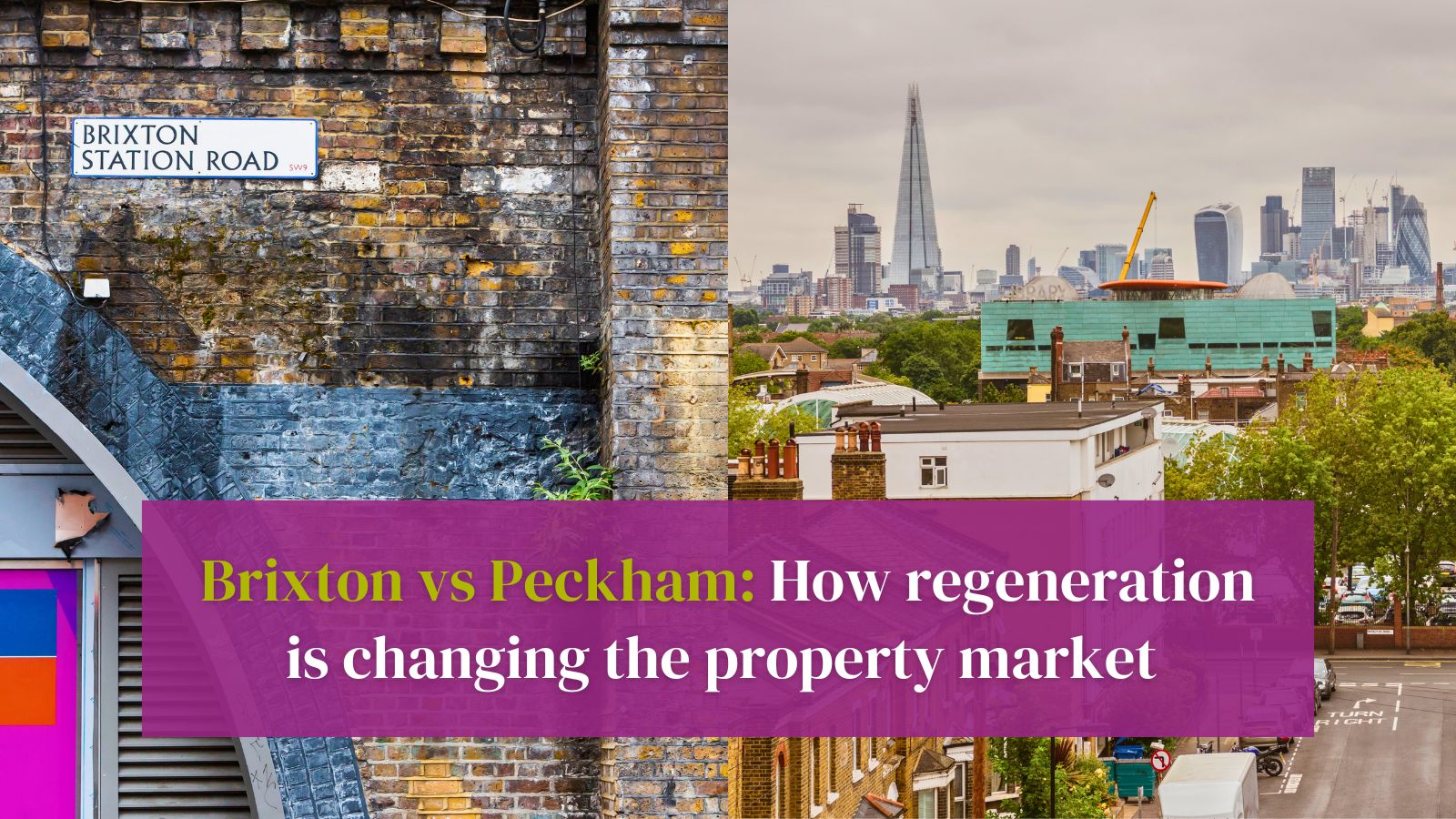
Brixton and Peckham are often mentioned in the same breath. Both are in South London, both have seen major change over the past decade, and both continue to attract buyers, landlords and long-term residents who want to be part of that growth.
But regeneration is not a single story, and it does not affect every street or property in the same way. If you are thinking about buying or investing in either area, it helps to look past the headlines and understand what is really shaping demand.
What regeneration actually looks like in Brixton and Peckham
In Brixton, regeneration has been steady and visible for years. Large-scale investment around Brixton station and Windrush Square has improved public space, while mixed-use developments have added new homes alongside retail and office space.
Transport is one of Brixton’s biggest advantages, with the Victoria line offering fast connections into central London. That has kept demand strong, particularly among buyers who commute.
Peckham’s story is slightly different. It has seen a mix of smaller, creative-led regeneration alongside larger council-backed projects. Areas around Rye Lane and Peckham Levels have become major draws, while investment in Peckham Square and improvements to public spaces have made the area feel more established.
The planned upgrade work around Peckham Rye station and ongoing development sites signal long-term change, but it still feels more in transition compared to Brixton.
How infrastructure and local amenities shape demand
Transport, public space, and what people can actually do day to day all play a big role in property demand.
Brixton benefits from clear infrastructure strength. The Underground, multiple bus routes, and a well-established high street make it feel connected and busy. That tends to attract buyers who want convenience and are willing to pay for it.
Peckham relies more on Overground and National Rail, which still offer strong links but feel less direct than a Tube line. What it offers instead is a sense of change, with new venues, independent shops, and cultural spaces shaping the area.
For many buyers and renters, that difference matters. Some want a finished product. Others are more interested in somewhere that is still evolving.
How are prices and demand shifting in each area?
Recent data from the UK House Price Index shows that prices across both Lambeth (which includes Brixton) and Southwark (which includes Peckham) have steadied over the past year, following stronger growth in previous periods.
That reflects a wider London pattern, with buyers becoming more careful about what they pay and more selective about location and condition.
Brixton still tends to sit at a higher price point, which comes back to its transport links and how established it feels. Peckham, while no longer “under the radar”, can still offer better relative value depending on the street and type of property.
Rental demand remains strong in both areas. London rents have continued to rise over the past year, and both Brixton and Peckham attract a steady mix of young professionals and sharers. At the same time, tenants are more selective than they used to be, so presentation and location within each area are making a bigger difference.
What do those numbers look like on the ground?
According to the UK House Price Index, average property values in Lambeth sit around £554,000 as of early 2026, which supports the view that Brixton remains one of the higher-priced South London markets.
Southwark typically tracks slightly below this depending on the mix of properties sold, which keeps Peckham more accessible in relative terms.
Rents follow a similar pattern. Data from the Office for National Statistics shows average monthly rents in London reaching around £2,200 to £2,250 in 2025, reflecting continued demand across the capital.
In Brixton, one-bedroom flats commonly achieve around £1,700 to £2,100 per month, with higher figures close to the station or Brockwell Park. In Peckham, similar properties often fall between £1,500 and £1,900, although well-presented homes near Rye Lane or Peckham Rye can push beyond that.
What matters more than the averages is how quickly things can change from one street to the next. In Brixton, properties within easy reach of the Underground tend to carry a premium. In Peckham, values can shift within a few minutes’ walk depending on how connected or established that part of the neighbourhood feels.
For buyers and landlords, this is where local knowledge becomes more useful than headline figures. Two properties close to each other can deliver very different outcomes over time.
Does regeneration guarantee growth?
This is one of the most common questions, and the honest answer is no.
Regeneration can improve an area, but it does not guarantee price growth or rental increases on its own. Timing, location within the neighbourhood, and the type of property all play a part.
For example, a well-located flat near Brixton station may have already seen most of its value growth, while a quieter part of Peckham might still have room to develop. Equally, some new developments can price ahead of the local market, which limits short-term gains.
It is also worth remembering that regeneration can take years to fully play out. Buyers looking for quick returns may not always find them.
What is it like to actually live in these areas?
This is where the differences become more personal.
Brixton has a faster pace. The high street is busy, the transport is constant, and there is always something happening. For some, that energy is a big part of the appeal. For others, it can feel intense.
Peckham offers a different rhythm. It is still lively, especially around Rye Lane, but there are more pockets that feel neighbourhood focused. You can find quieter residential streets not far from the centre of activity.
These details matter just as much as price or rental yield. They influence who wants to live there, which in turn shapes long-term demand.
Why local insight matters more than ever
Regeneration is often spoken about at borough level, but property decisions happen at street level.
Two properties a few minutes apart can behave very differently in terms of price growth and buyer interest. That is why broad trends only tell part of the story.
Understanding which parts of Brixton are already established, and which parts of Peckham are still changing, is key to making a confident decision.
The takeaway
Brixton and Peckham are both strong South London markets, but they are at different stages.
Brixton offers established demand, strong transport, and a more settled market.
Peckham still carries a sense of change, with ongoing regeneration shaping its future.
Neither is automatically a better choice. It depends on timing, priorities, and how you see the area evolving.
Considering Brixton or Peckham? Get local advice from the team at Urban Village.